


The INOSIM User Day 2026 brought together more than 45 users, developers, and partners in Dortmund to exchange experiences, discuss challenges, and explore the latest developments in simulation and digital decision support.
The event featured practical case studies, lively discussions, and insights into current and future INOSIM developments. Topics ranged from resource prioritization and wastewater treatment simulation to flexible modeling concepts, production forecasting with Foresight, and the growing role of AI in simulation projects.
As always, the focus was not only on technology, but also on learning from one another. The presentations demonstrated how simulation is being applied to solve real-world challenges, while the discussions provided valuable feedback that will help shape future product development.
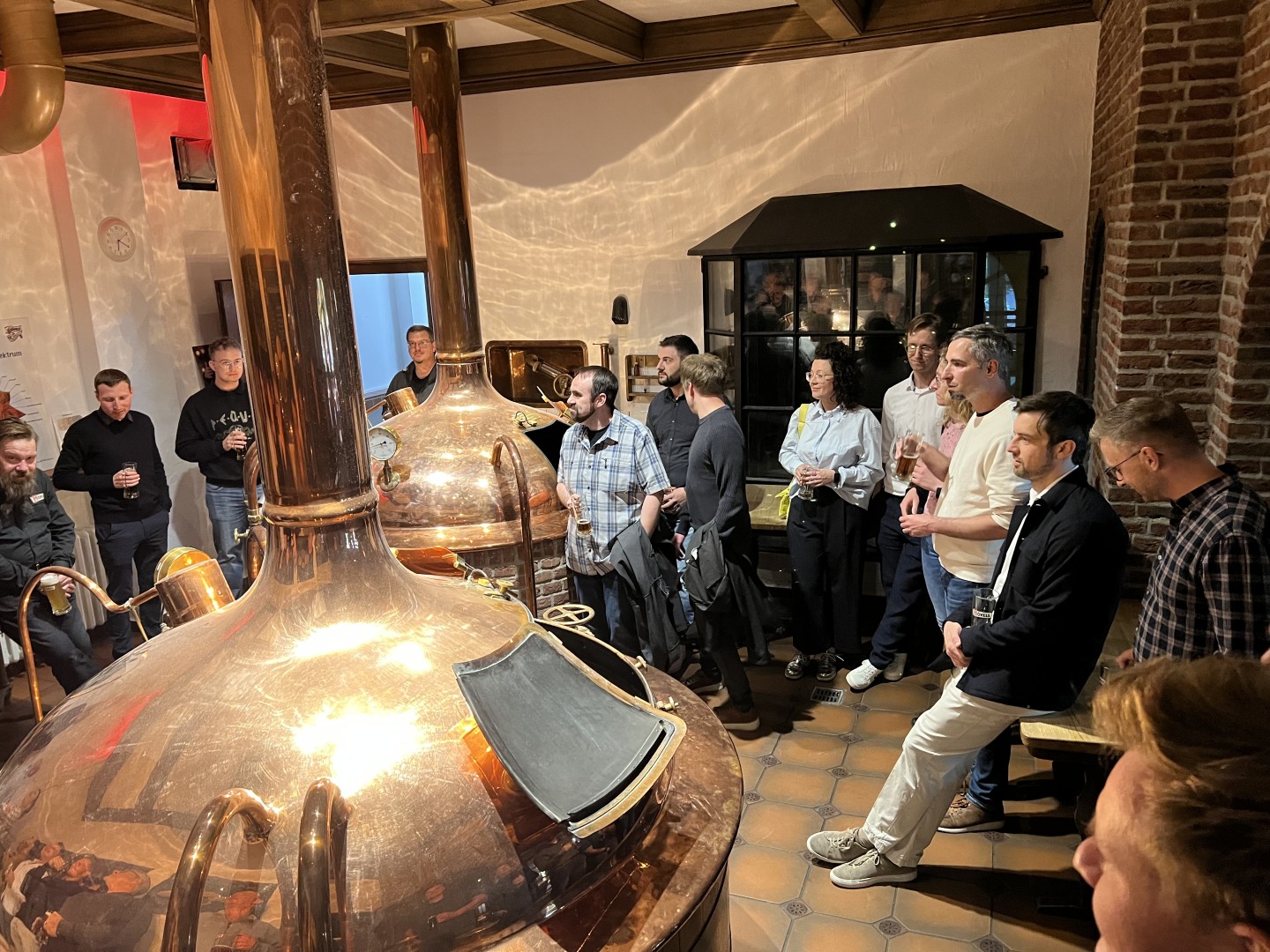
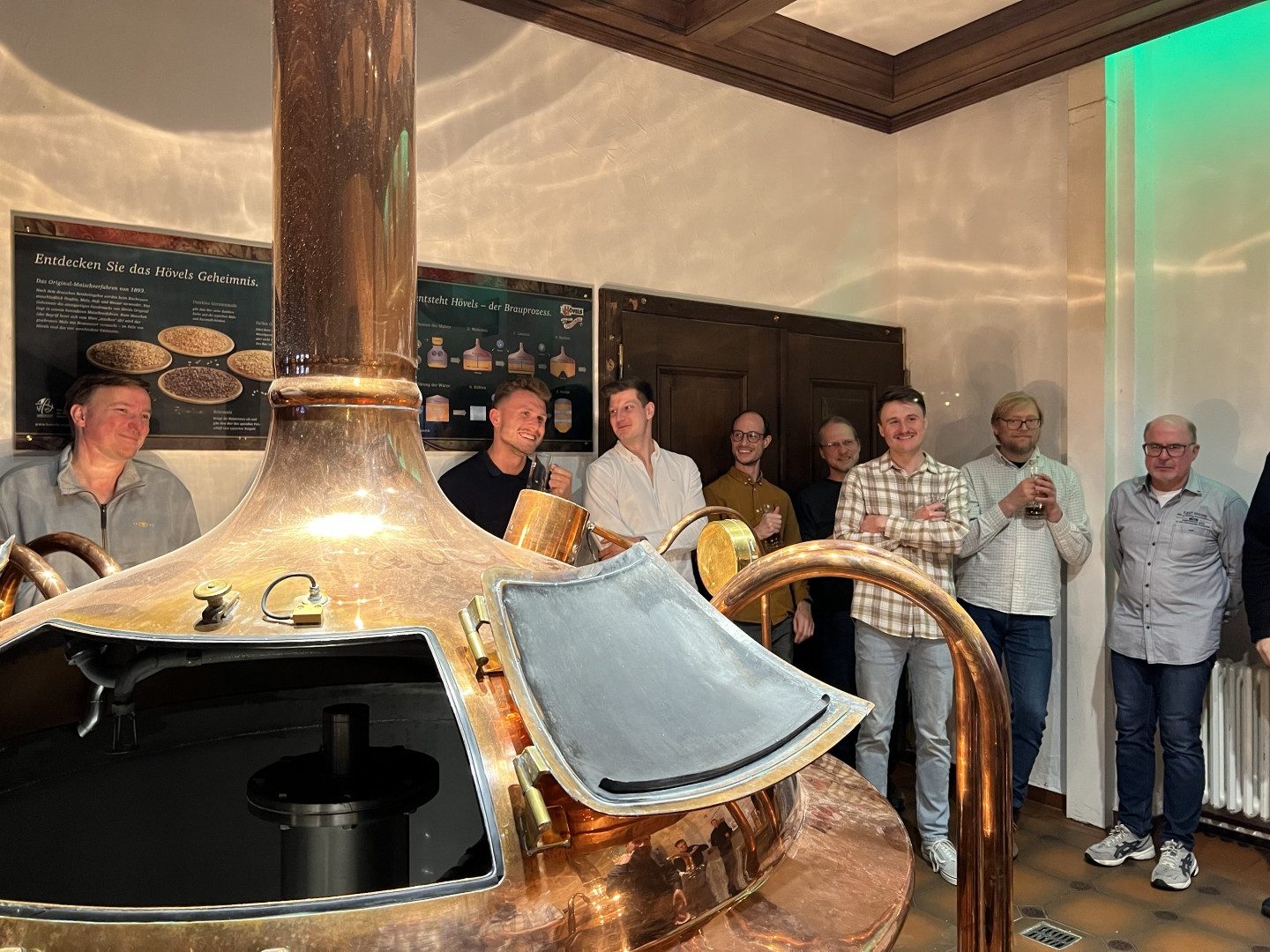
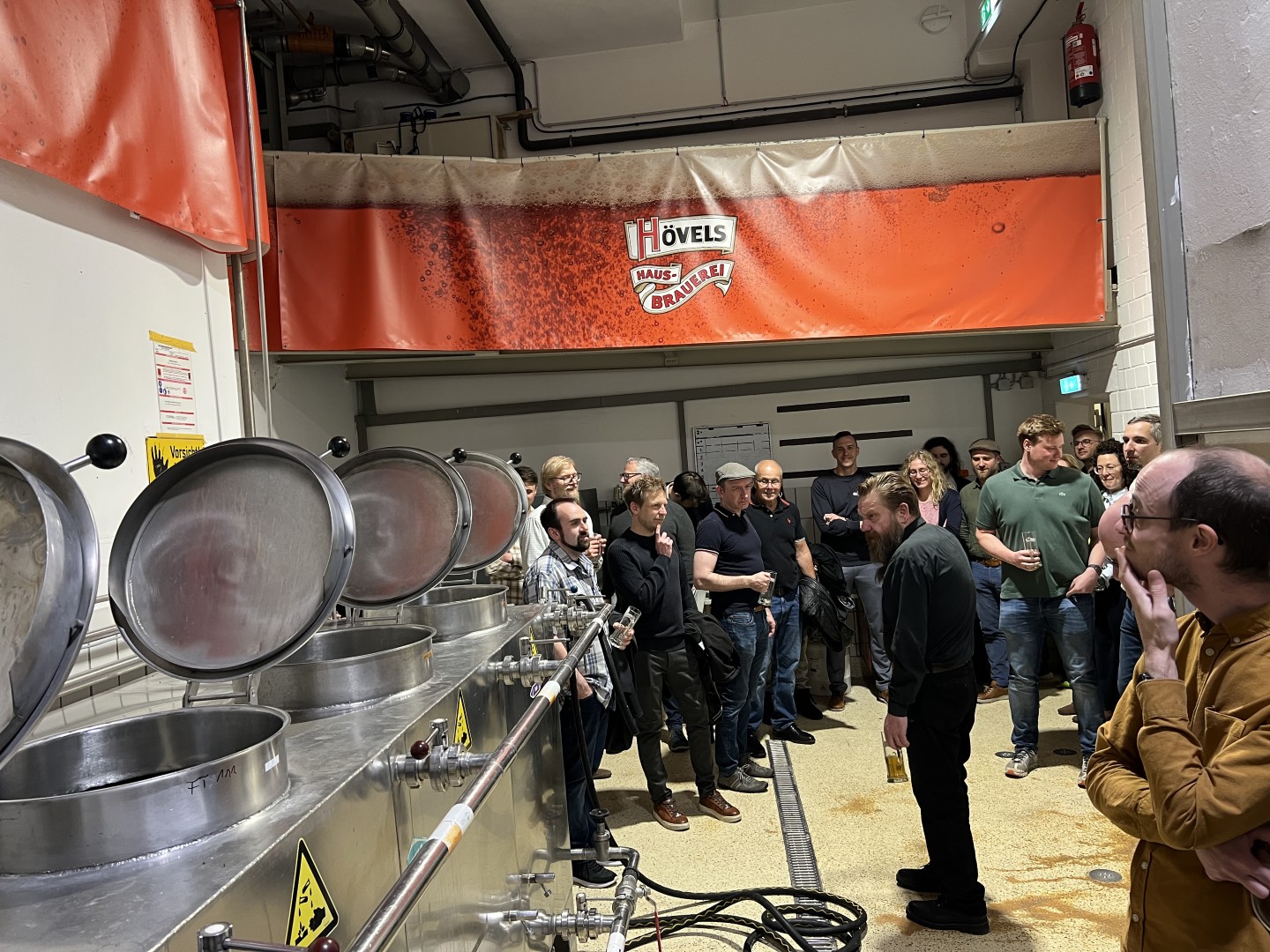
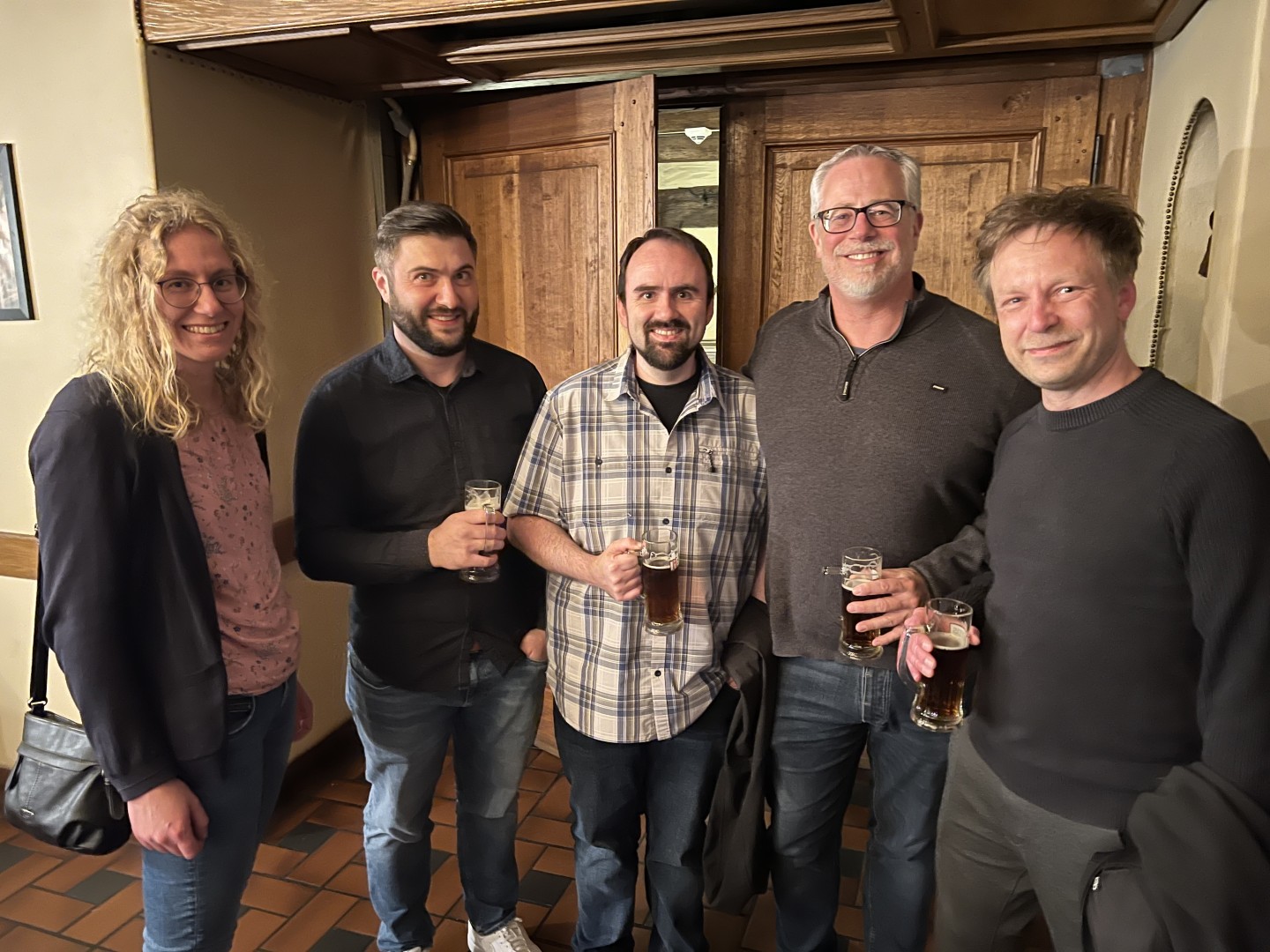
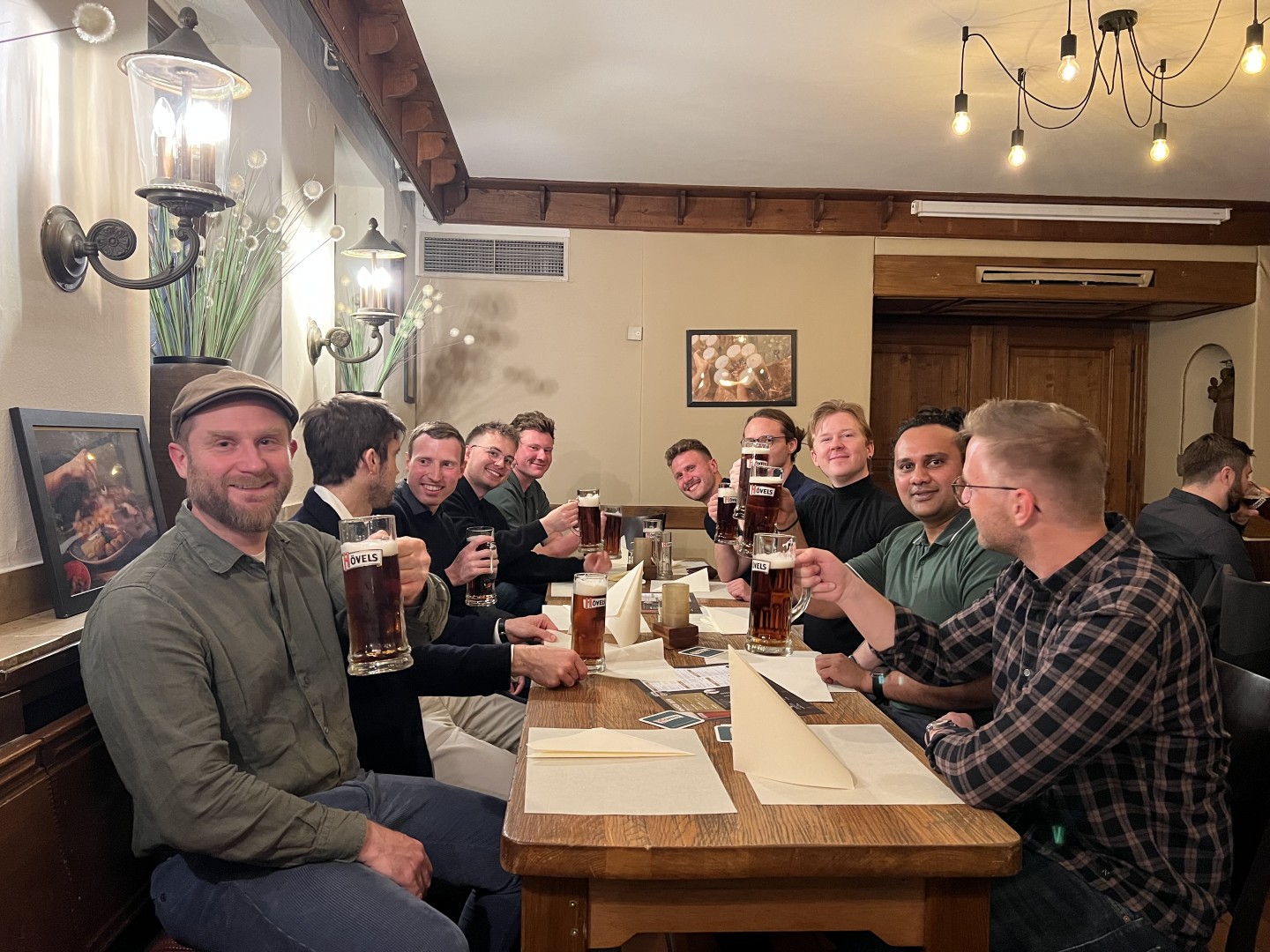
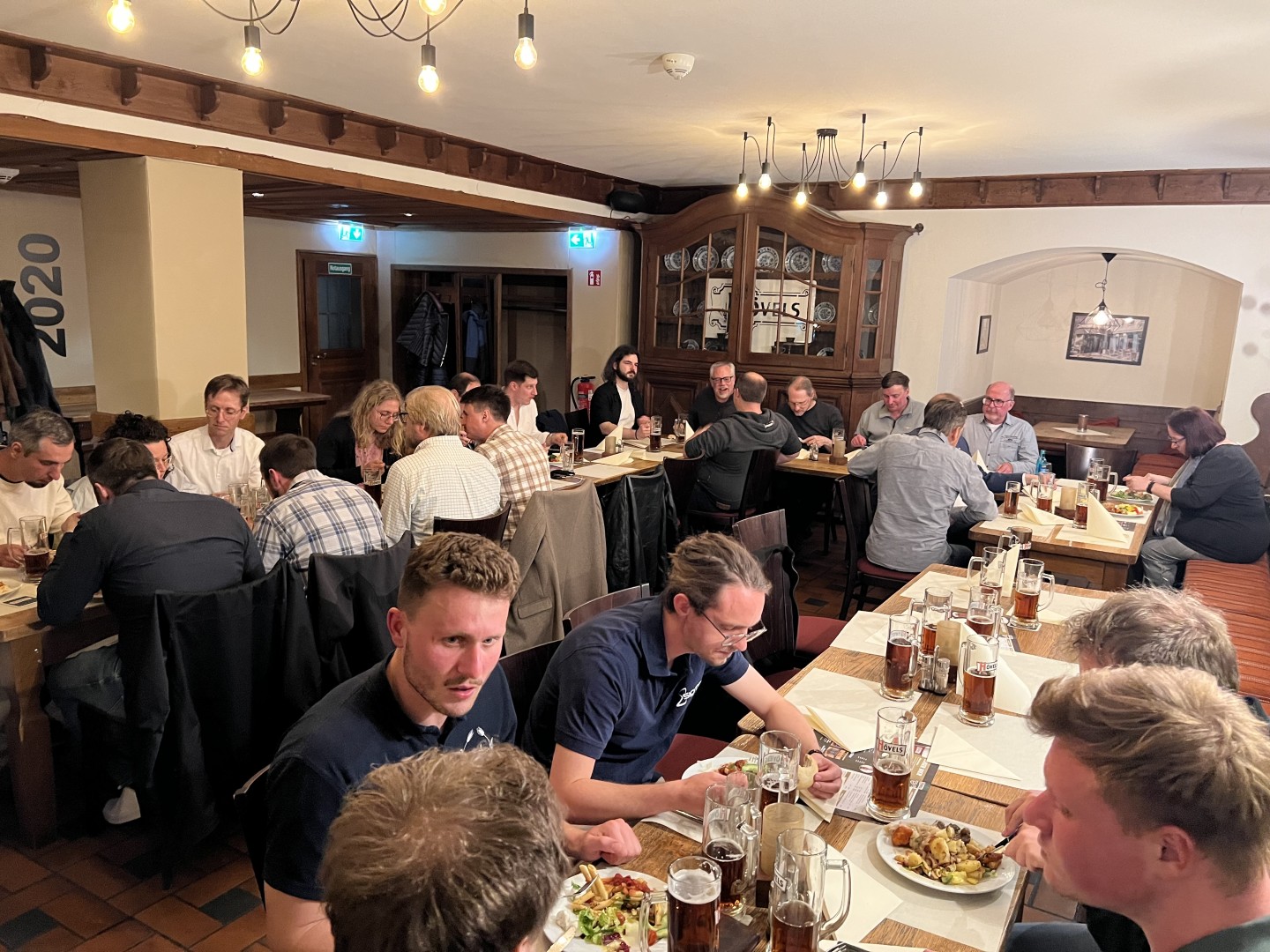
The Evening Before at Hövels Brauhaus
Over 35 INOSIM users already met the night before the User Day to visit Hövels Brauhaus, the last remaining brewery within the medieval limits of the town – yes, this is where the streetname “Wall” comes from. We started the evening with a brewery tour, which was not only informative, but also informative: “A beer belly doesn’t come from beer, but from the schnitzel you eat afterwards.”
The User Day: learning, discussing, networking
The User Day 2026 was opened by INOSIM CEO Peter Balling and welcoming remarks by ZETA CEO Alfred Marchler. After that, INOSIM’s Dominik Aubel guided through the day. In the following paragraphs, we would like to give you an overview of the contents of the presentations by INOSIM users and developers and the discussion. Most of the slides are available for download after login.
Carolin Dietz, Exyte: “Process prioritization in resource-constrained environments”
Carolin presented a case where a worker resource should prioritize unloading an autoclave over documentation or other manual tasks. With multiple autoclaves, the current INOSIM logic can cause unrealistic waiting times because resource allocation is based only on order priority and follows a first-come, first-served principle within an order.
She introduced solutions based on a “look-ahead” approach: if an autoclave needs to be unloaded before another manual task finishes, the manual task is delayed until unloading has started. This resolves most autoclave waiting times. Remaining waiting times were caused by special cases involving other resources or previously waiting operations, which required a more complex solution using parallel branching.
The audience also discussed additional ideas, such as reserving resources through dynamic availability reduction or dedicated reservation resources. There is a demand for resource allocation and prioritization controls and this feature will be considered for future updates.
Daniel Markthaler, Chemgineering: “Simulation of Hydraulic Flows with pH Changes: Application to Industrial Wastewater Neutralization“
Daniel presented a simulation study of a wastewater neutralization system in the semiconductor industry to assess whether the existing plant can handle future wastewater volumes or if a third neutralization line will be needed. The model included both hydraulic behavior and pH neutralization.
Variable wastewater streams with fluctuating flow rates and pH values are collected in tanks and processed through three stirred tanks, where acid or caustic is added to meet pH specifications. Simulations of four representative worst-case days showed that, after parameter optimization, the existing setup can handle the projected wastewater volumes even at full production capacity. INOSIM’s material properties feature was also used to model pH values. As it is not suited for systems with simultaneous inflows and outflows, a workaround was developed together with the INOSIM support team.
The session concluded with a discussion on integrating the neutralization model into larger production models to analyze wastewater treatment and manufacturing in a combined simulation.
Nils Oldenburg, artistratis: “The Flexible Master Recipe”
Under the title “The Flexible Master Recipe,” Nils presented a project that had to deliver answers for key management decisions within just two months and with limited customer resources. The model combined continuous and batch production, while considering workforce availability and storage constraints. The main goal was to evaluate different shift systems under fluctuating demand and changing product portfolios.
Using INOSIM’s flexibility, multiple structurally similar products were represented within a single recipe. Through scripting, the appropriate parameters were selected and unnecessary steps skipped, reducing the number of recipes from 35 to 8. The model also captured real production behavior by dynamically adjusting distillation throughput based on tank levels and requiring cleaning after a complete shutdown.
Nils concluded with practical advice for fast-paced projects: minimize the number of recipes through smart process analysis, separate data from model structure, and make efficient use of available customer resources for data collection.
Torsten Mosebach, ZETA: “How Fill & Finish product logistics becomes OSD Production process”
As a continuation of last year’s presentation by Danylo, Torsten presented a simulation project which uses the Packaged Goods Add-On to model Fill & Finish logistics by moving discrete handling units (MUs), such as pallets and IBCs, through the facility.
A modular approach was adopted, allowing users to define the production path for each SKU via an Excel-based matrix. This concept was extended to a Fill & Finish process, where the sequence of process steps is also controlled through a SKU-specific matrix, making the model easily scalable for additional products.
The simulation study revealed that certain orders created bottlenecks, temporarily pushing warehouse capacity to its limits. It also highlighted the impact of equipment disruptions on storage utilization.
A custom dashboard was developed to visualize the location and status of each MU. During the discussion, participants noted that similar functionality is already available in standard INOSIM BICON dashboards. The team is now working on extending the ZETA standard template to make this Packaged Goods modeling approach reusable for future projects. The discussion focused on the benefits and limitations of templates, highlighting that most INOSIM users rely on standard models with built-in parameterization features.
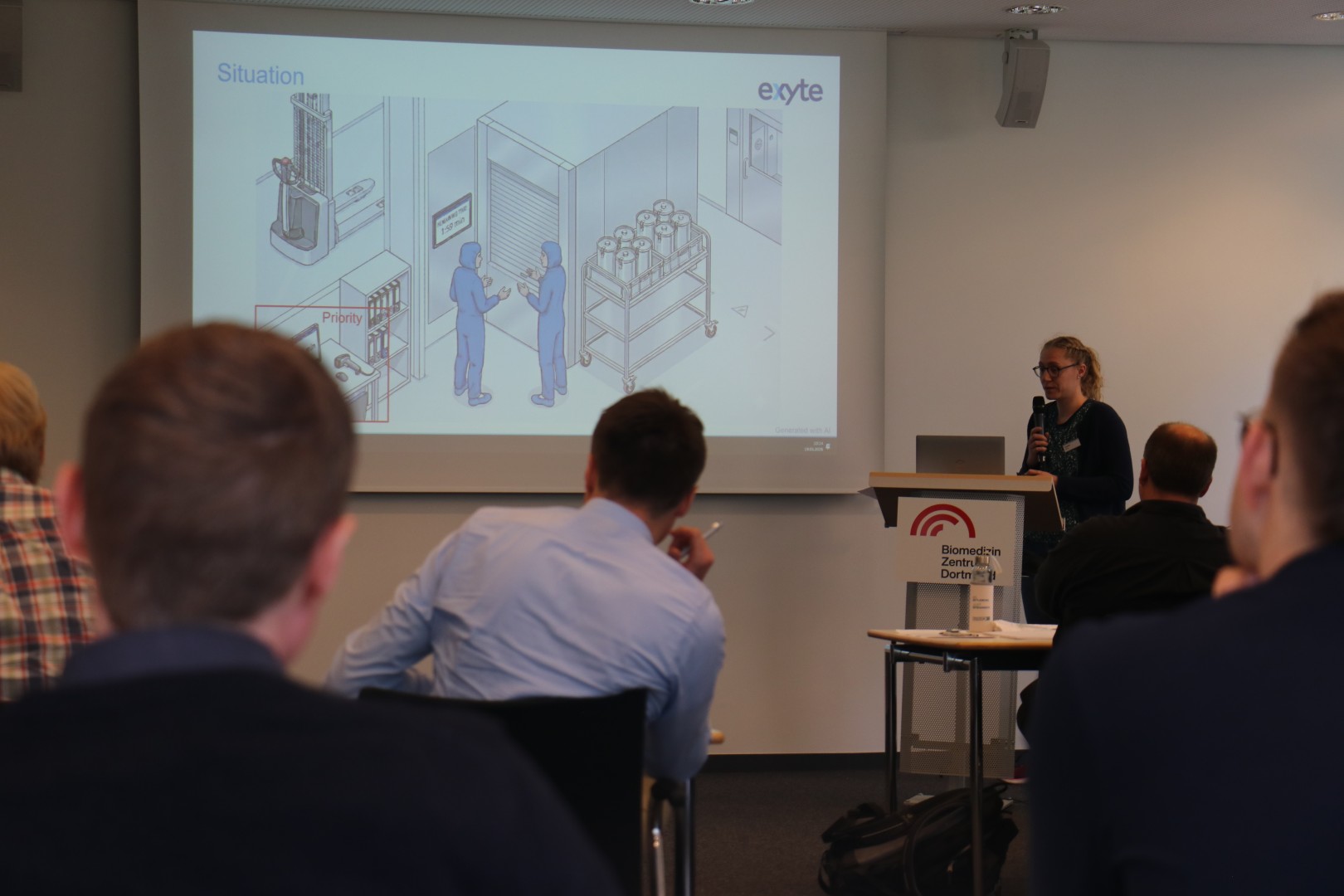
Carolin Dietz, Exyte
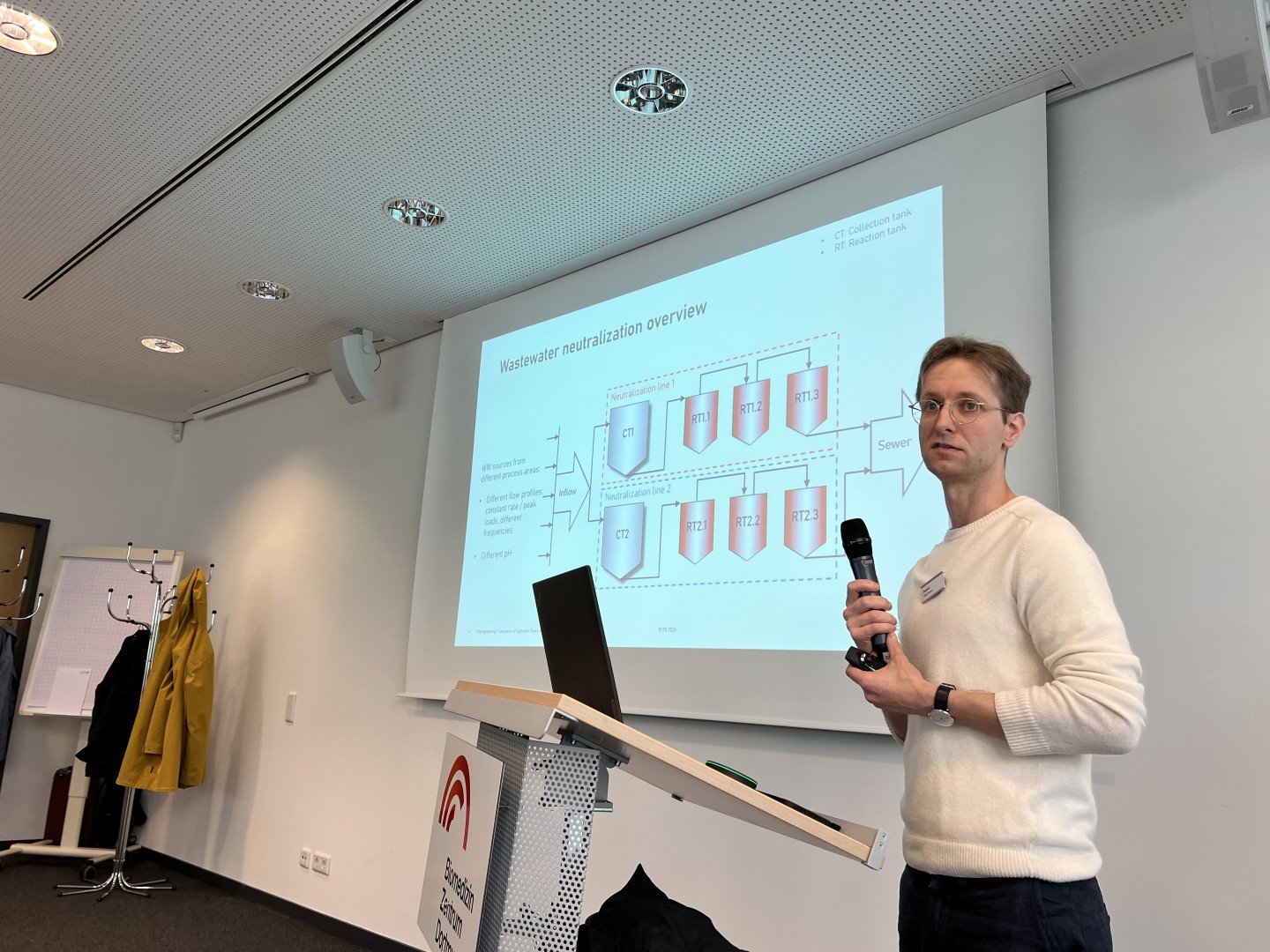
Daniel Markthaler, Chemgineering
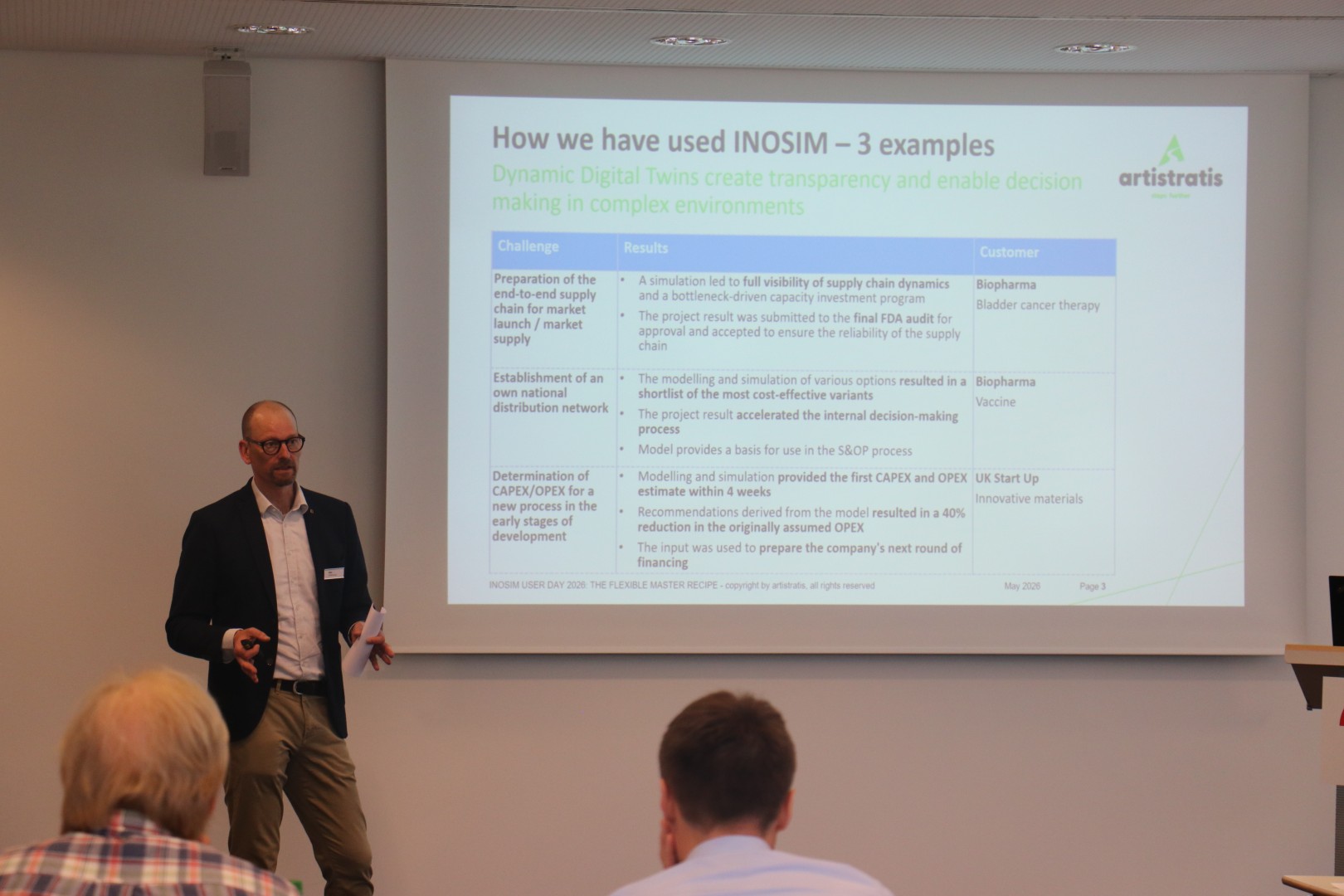
Nils Oldenburg, artistratis
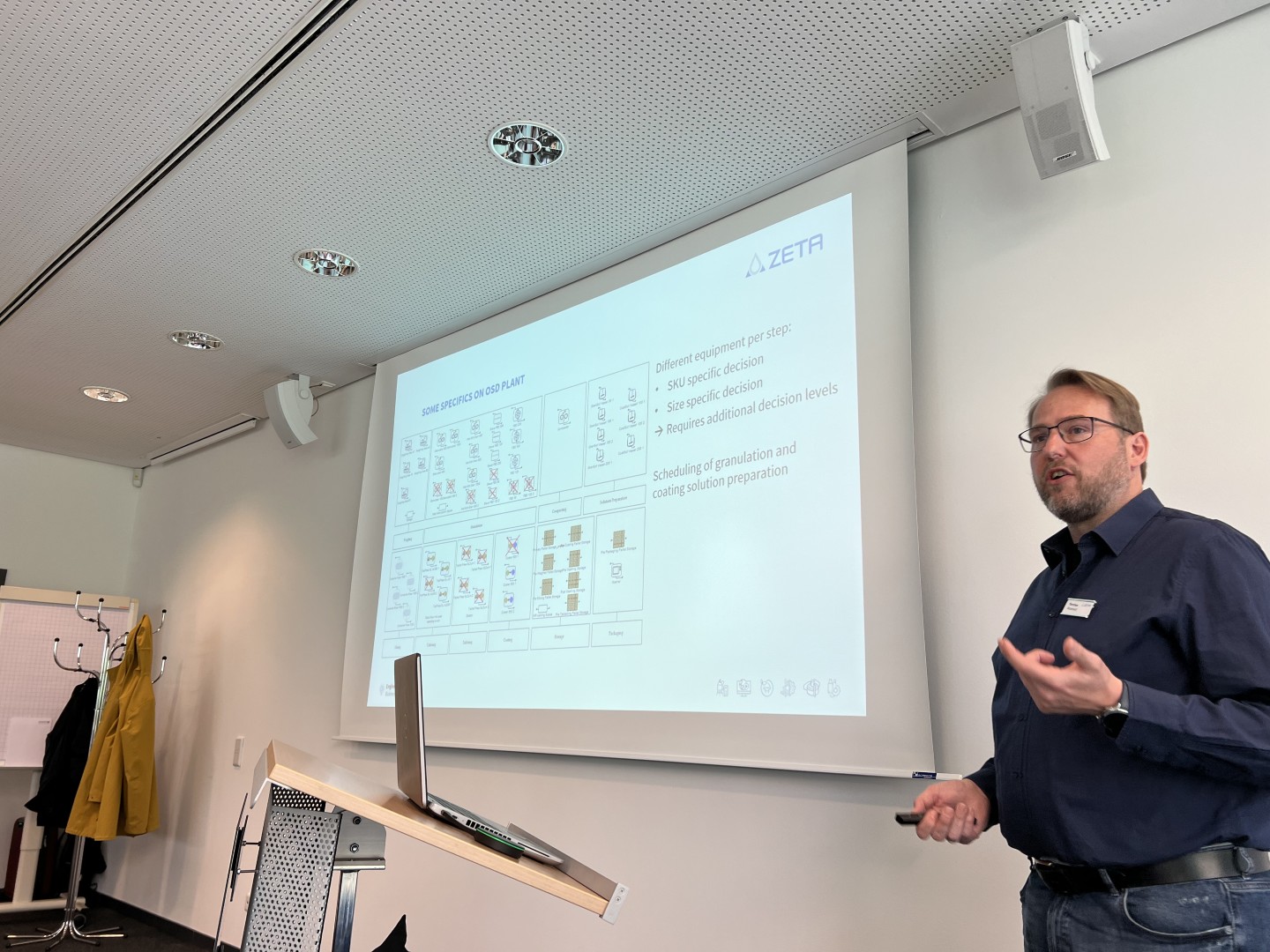
Torsten Mosebach, ZETA
Foresight in Action
Dennis Meister, Marcus Glöckner, Octapharma: “Bringing Light to the Dark”
Under the title “Bringing Light to the Dark” Dennis and Marcus presented how INOSIM Insight and Foresight are being used at Octapharma.
Dennis shared his experience of establishing an internal simulation service within the company. While demand did not immediately materialize as expected, challenges such as proving availability, expertise, and commitment had to be overcome. His key takeaway was that simulation should be a mandatory part of every concept phase, with templates enabling rapid project execution.
Marcus described the implementation of INOSIM Foresight at Octapharma in Springe using an humoristic video game analogy: Production Manager Mario and Shift Supervisor Luigi battle all sorts of problems (Bowser and his companions) to save the princess — in Octapharma’s case, specifically those related to chronic blood disorders. Previously, operations were managed using Excel spreadsheets that were manually updated, a time-consuming process; as a result, delays weren’t visible to everyone until at least a day later.
The project focused on five key pillars: data quality, IT infrastructure, data integration, simulation model design, and user acceptance. After six months of operation, Foresight has proven highly valuable by providing reliable, simulation-based forecasts of the next two weeks of production. With updates every five minutes, delays become visible almost immediately while significantly reducing manual planning effort.
Patrick Kümmel, CSL: ” What-if Maintenance Planning with Foresight at CSL Behring“
As one of the people who implemented the first Foresight prototype several years ago, Patrick provided an overview of the status of the latest maintenance planning extension for the Foresight system at CSL. With this extension, it will soon be possible to schedule maintenance orders on a trial basis and predict their impact on the production process. As part of this expansion, the latest version of Foresight will be rolled out, and a completely revamped model will be implemented to further improve stability. Additionally, the Tableau dashboards will be replaced with an internal visualization solution that enables closer integration between the system’s display and control functions.
Development and Innovation at INOSIM
A mixed session of core development updates and innovation topics, enhanced with prototype user feedback from Boehringer.
INOSIM Insight: New Layout and much more in Development
Michael Günther presented the current state of the new layout, based on a new technology. This future release will enable users to implement their own custom icons, a feature that was received very positively by the audience. More advanced animations than today will also be available (e.g., coloring unit icons by their processing and transfer state, displaying tank filling levels and changing the color of connections based on transfer properties).
For the upcoming release INOSIM 2026.2 it is planned to enable scripting access to properties of curves (e.g., low / high values) and synchronization links in recipes. A new SQL server will be available that raises the file size limit from 10 to 50 GB.
Furthermore, INOSIM will start offering a new licensing option soon: Wibu Codemeter CmCloud, in addition to the classic USB-Stick and server license. With CmCloud, the license container is stored on Wibu’s high availability server, so that it eliminates the need for the user company’s IT department to host their own license server. Contact our support to learn more.
INOSIM Innovation: experience with AI chatbots and BICON update
Dominik Bleidorn gave an introduction to our approach at an AI chatbot (working title: “INO-SIMon”): the first shot aims at providing scripting support for new and experiences users. For data-privacy reasons, the focus is on providing the knowledge for common LLMs (as files) and let users bring their own AI subscription with API access. In the future, the team wants to enable bidirectional read-write interaction with the full INOSIM model, to enable AI-assisted model setup and analysis of results.
Currently, INOSIM is overhauling the complete user documentation (~160 000 words) from a proprietary format into open markdown files, which are a lot easier to read for LLMs. A side effect is that a future release will include a new user documentation system – a prototype was already demonstrated live by Dominik.
Experiences at Boehringer with SIMon protoype
Erik Hasenfus and Karthik Harinath from Boehringer Ingelheim shared their experiences with an early prototype they started using as an aftermath of the AKPS meeting in Würzburg in October 2025. They presented a model that was (conceptually) completly build by AI, including all coding of typical INOSIM controls.
Visualization of Simulation Results
The release of BICON 2026 is expected soon with a big update: simulation results can be stored in a database. This allows a unified export structure for data-driven workflows, while export to CSV files and the proprietary Tableau format remain available. Dominik presented an early, vibe-coded prototype for browser-based data visualization tool. Spontaneously, INOSIM’s Peer Sander presented ZETA’s approach on simulation data analysis with a similar tool for their specific use cases (e.g., peaks water flow rates). The ZETA-INOSIM team is now already working on developing a stable visualization tool.
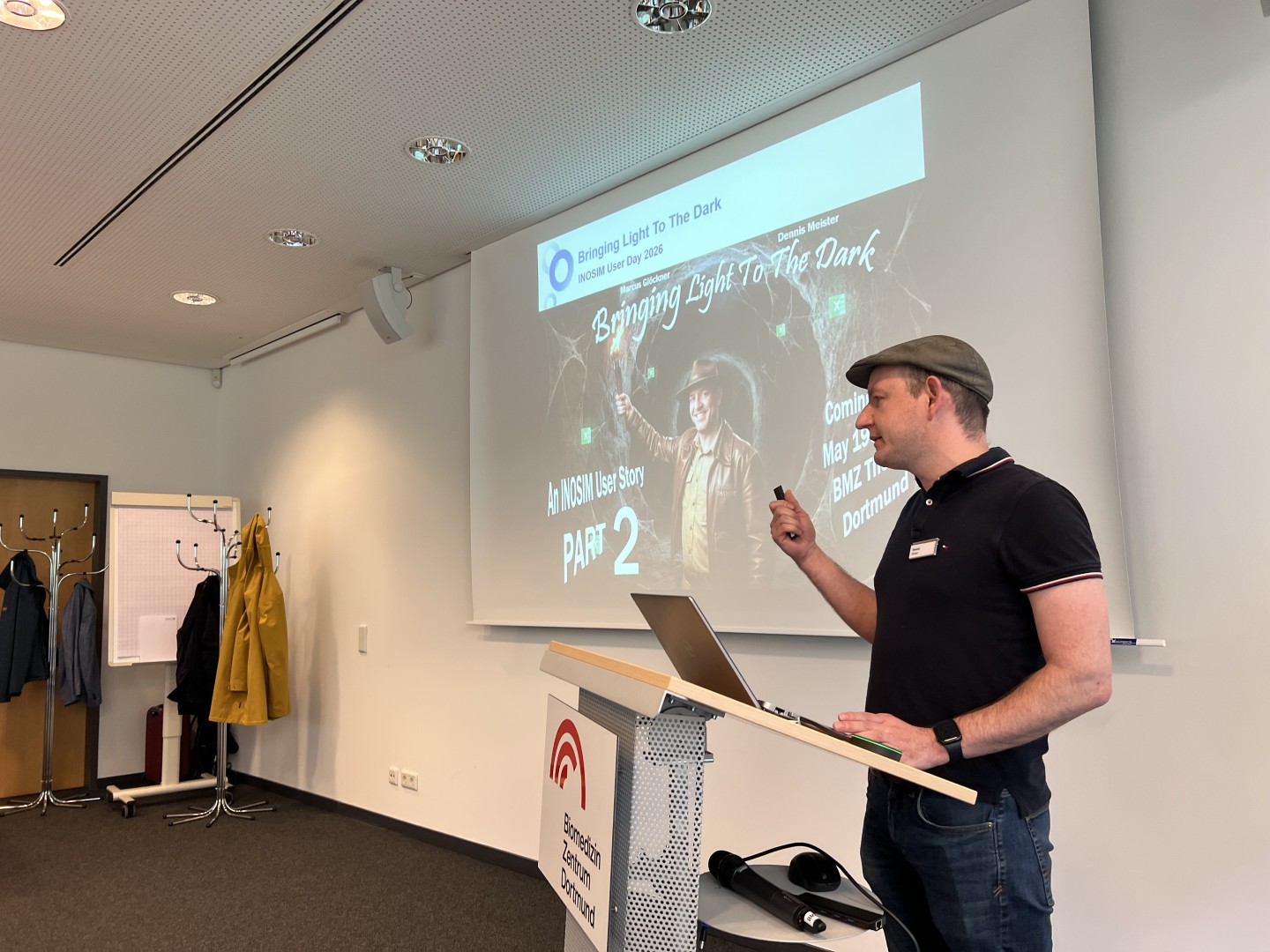
Dennis Meister, Octapharma
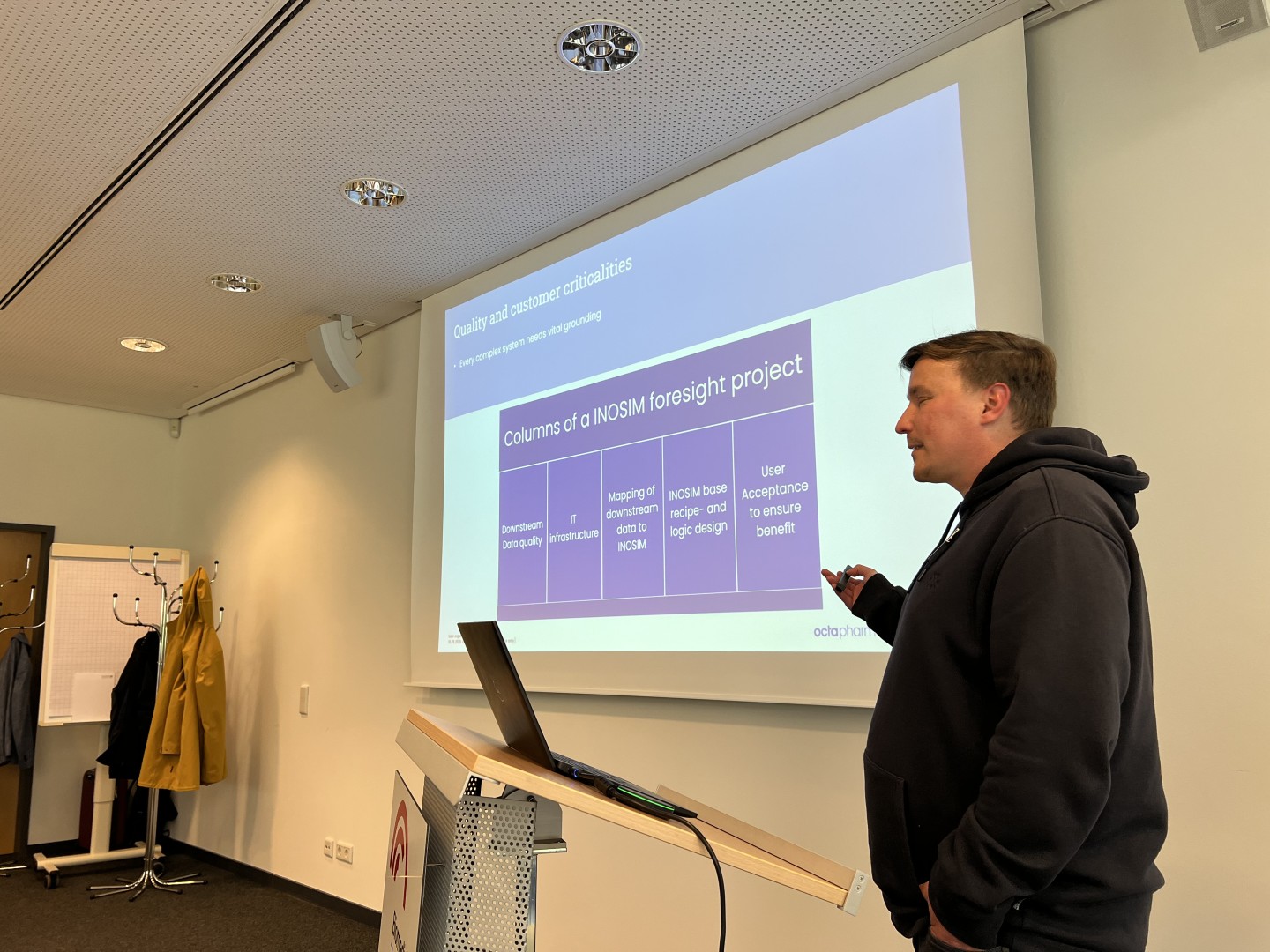
Marcus Glöckner, Octapharma
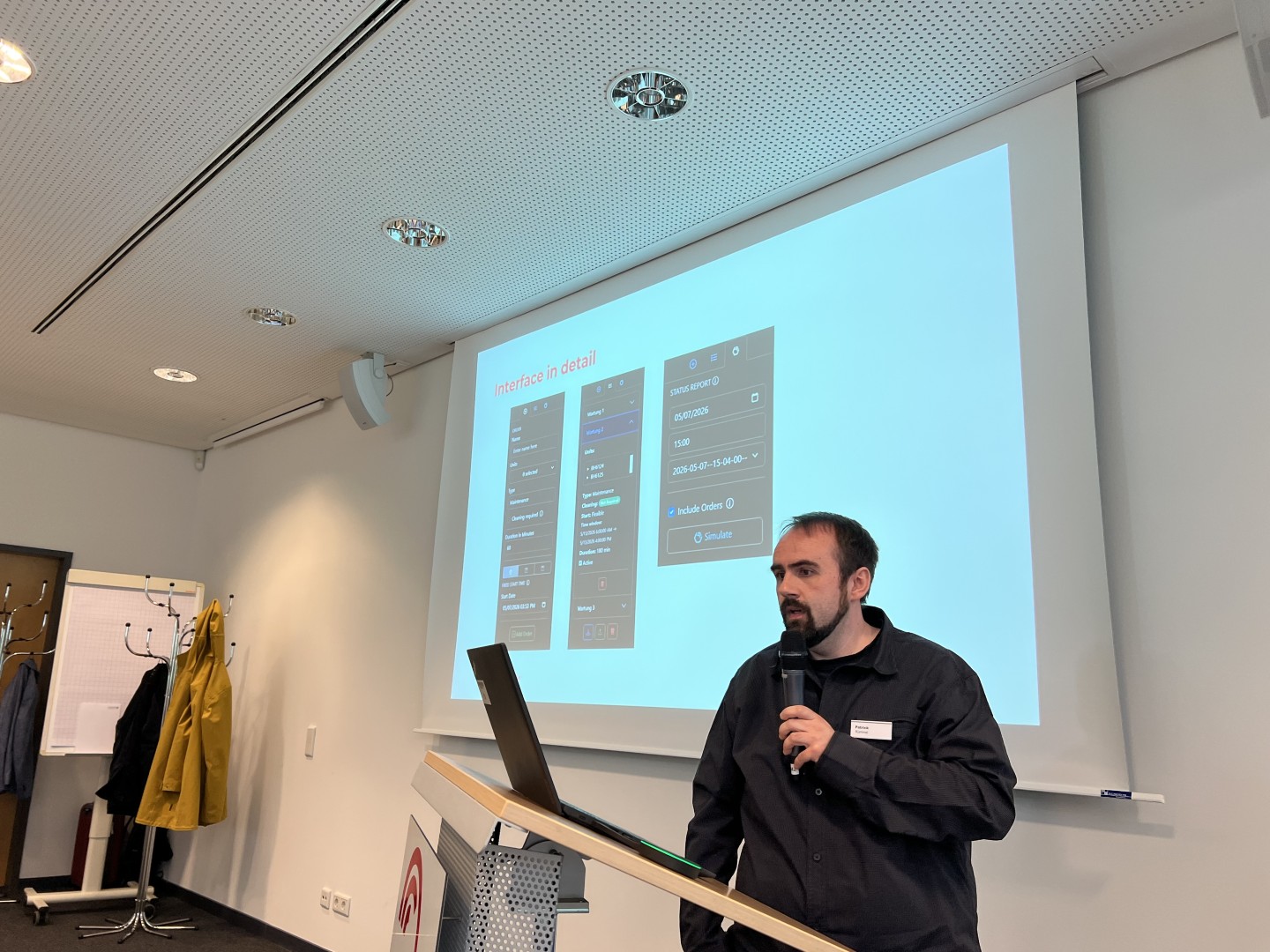
Patrick Kümmel, CSL Behring

Erik Hasenfus, Karthik Harinath, Boehringer Ingelheim
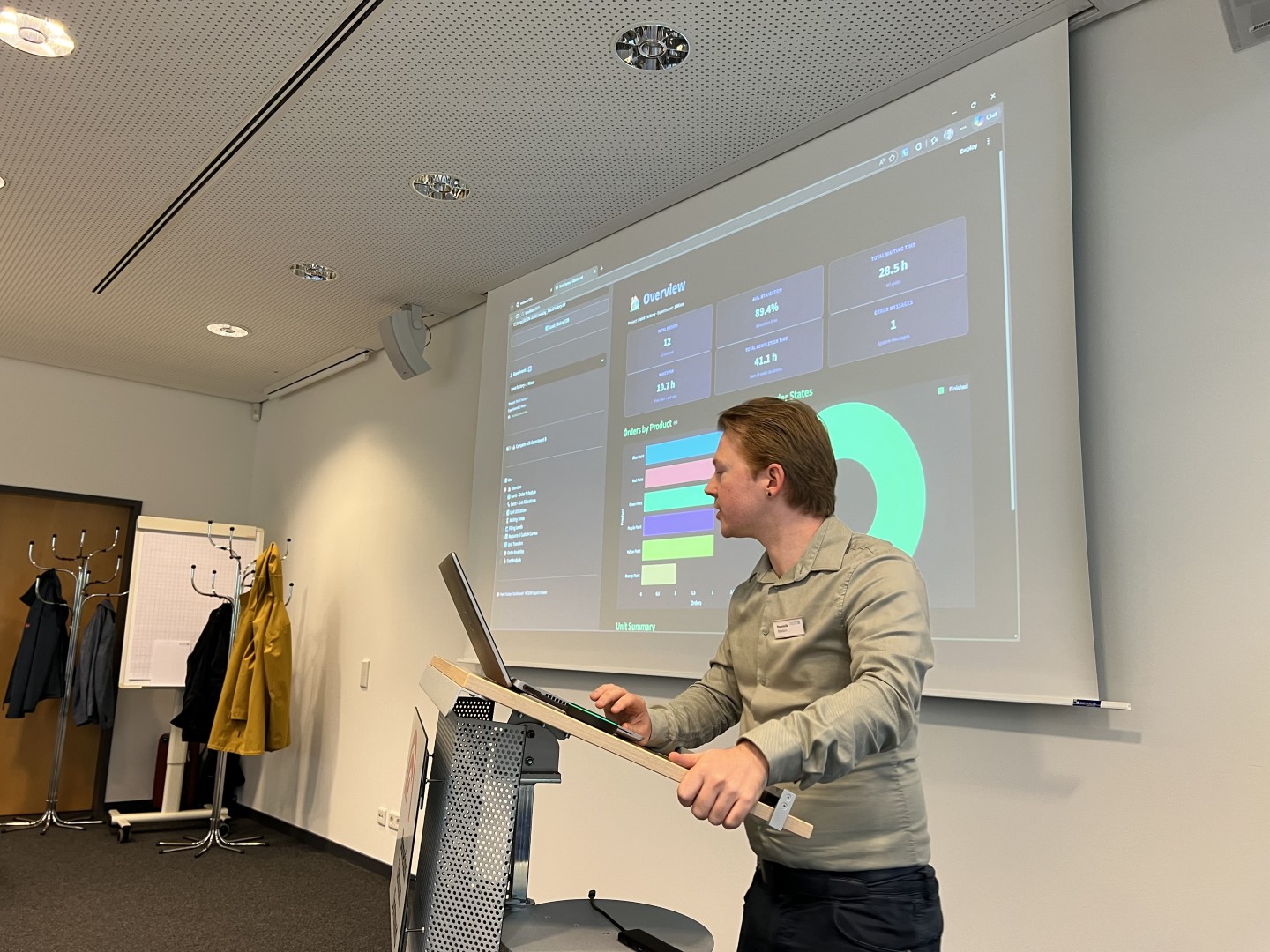
Dominik Bleidorn, INOSIM
Conclusion and final Get-Together
After a day packed with insights and discussions, the closing get-together offered a final opportunity for networking and informal conversations. In keeping with local Ruhr area traditions, guests enjoyed regional beer alongside champagne. Filled with fresh ideas and valuable inspiration, participants and the INOSIM team headed home at the end of the day. We are already looking forward to the next User Day, which is planned to take place in Dortmund once again in 2027. Details on the exact date will be shared on our events page, through our newsletter, and via our LinkedIn page.
Do you have any questions or would like to know more about this topic? Please contact us.
 General Inquiries